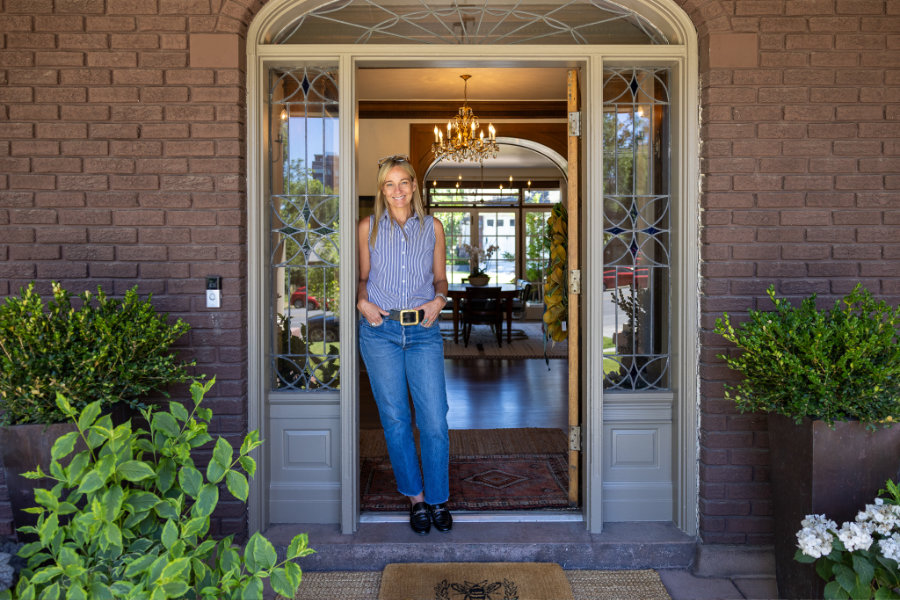
Ashley Shaw possesses the unshakeable patience required to teach high school English. Over a twenty-year career in the classroom, she instilled in her students both a deep appreciation for classic literature and the skills to express themselves through the written word. Ashley’s eloquence shines through in her written responses to our questions.
NH: Are there particular books that you enjoyed teaching to high schoolers?
AS: Jane Eyre was always one of my favorites to teach. Watching students unexpectedly fall in love with and relate to a novel written nearly two centuries ago was one of the great joys of my career. The best things—whether architecture, art, or stories—are created with authenticity, craftsmanship, and purpose. They continue to resonate because they’re rooted in something deeper than a passing trend.
A Living Collection

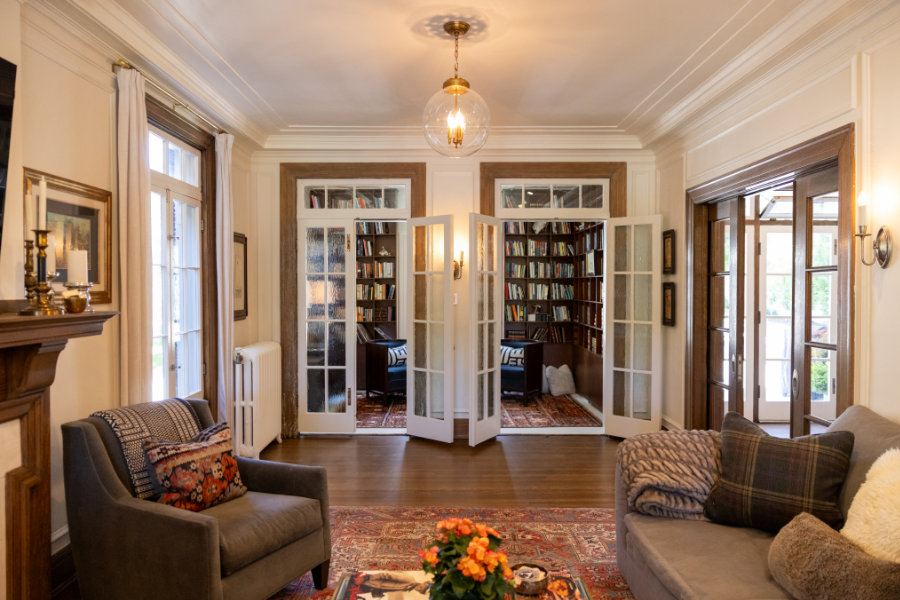
Ashley describes her personal collection of books—which fills the shelves of her sunlit reading room—as “an evolution through life.” For her, each volume serves as a tangible reminder of an important lesson, a distinct phase, or an adventure she has yet to complete.
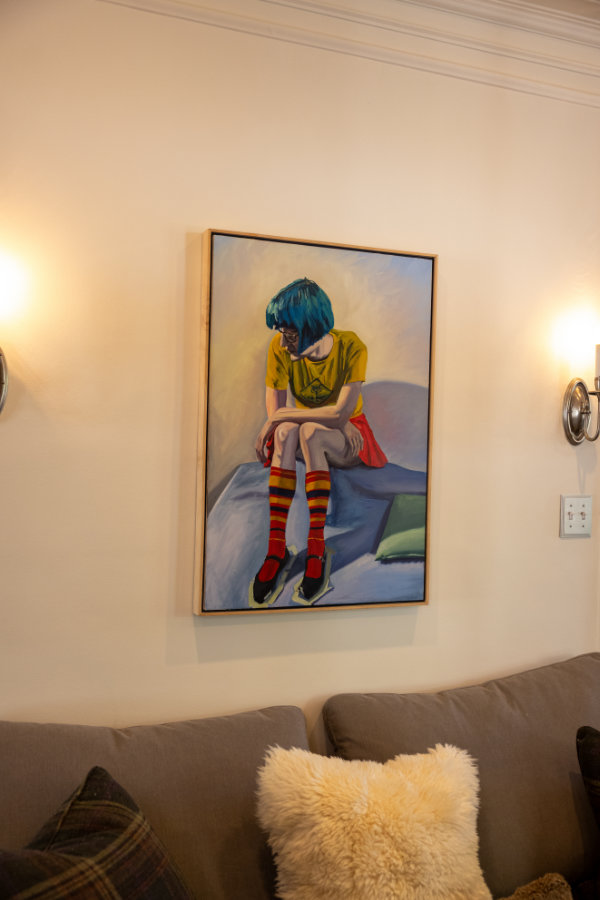
This commitment to honoring stories continues through her entire home. Every piece she owns comes with a narrative. She uses her grandmother’s china cabinet to store her sweaters. Original paintings by her friend, local artist Brad Slaugh, adorn the walls. Outdoor light fixtures were salvaged from a historic property in Park City, and even her houseplants have a back-story.
Worth the Wait
Ashley and her husband, Adam, toured several houses with Niche Homes Broker Karly Nielsen when they were considering a move. The moment they walked into this one, Ashley simply knew.
NH: What was your first walkthrough of this home like?
AS: My first thought was, ‘This is far more work than we should take on.’ My second was, ‘I so desperately want to live here.’
As the current stewards of the magnificent house, built on 100 South in 1916, the Shaws have gone to great lengths to preserve as much of its authentic personality as possible. When this home was built over a century ago, many modern amenities didn’t exist. Electricity was just beginning to catch on, and central air conditioning was a long way off. The original builders relied on thoughtful design, native materials, and hard-earned skill to make the space as comfortable as possible. As a result of their craftsmanship, many of the original elements have survived until today.

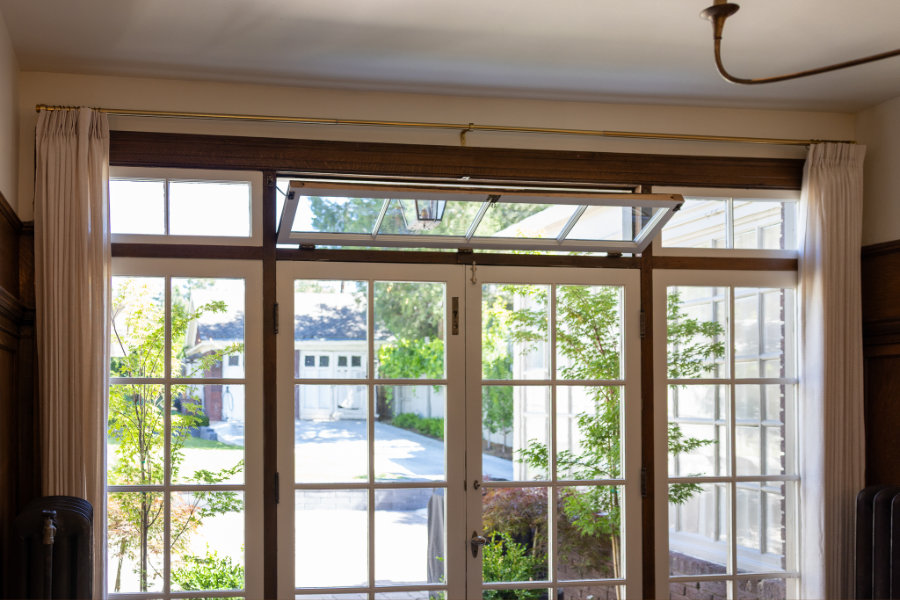
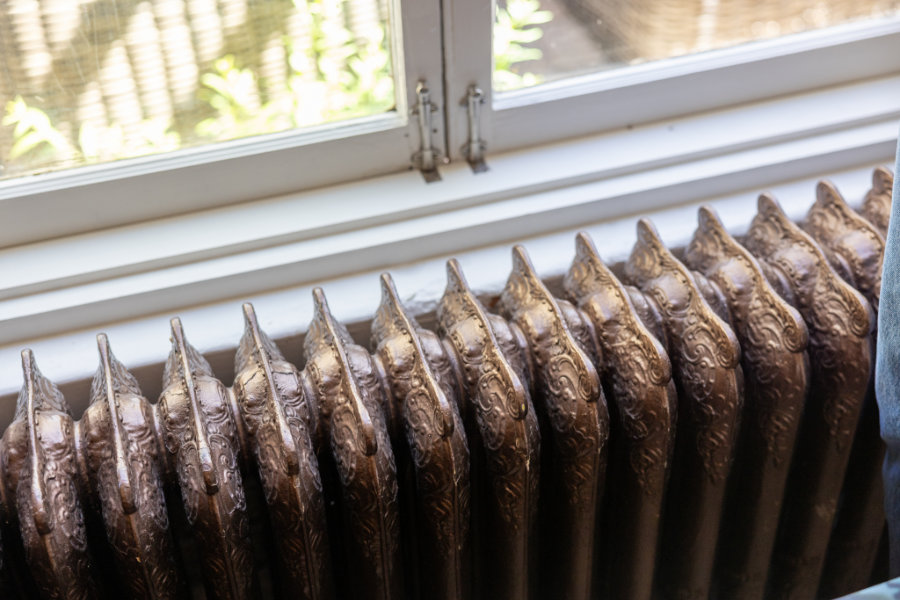
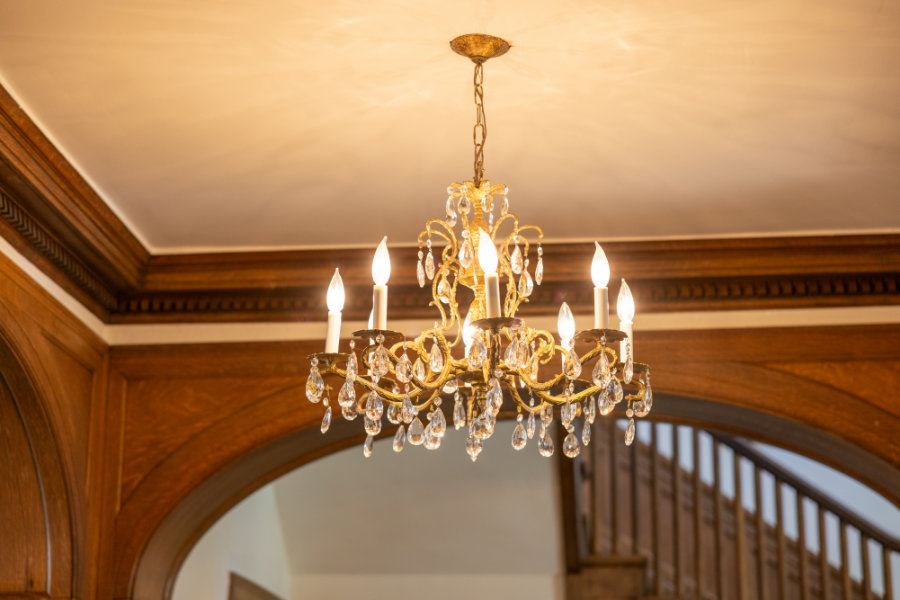
During our recent visit, Ashley welcomed us into the grand entryway, complete with original mirrors and an ornate chandelier, and then invited us into the formal dining room. She pointed out the transom window above the doors to the backyard, which makes a significant difference in keeping the room at a pleasant temperature. She explained the process of updating the radiant heat, rather than ripping it out, and how much they enjoy the gentle, even, and quiet heat from the boiler system.
The conscious effort to restore rather than modernize the home has steered the Shaws’ decisions at every turn. While it is certainly not the easiest route, there are plenty of reasons to focus on preservation.
NH: What appealed to you about this property?
AS: The extraordinary craftsmanship, beautiful proportions, and quiet dignity seemed rare, and I didn’t want to pass up the opportunity to experience its potential as my home. I’ve always been drawn to places with history, materials that have aged gracefully, and imperfections that tell a story. I wanted our renovation to reveal the layers. In many ways, restoring this home became an exercise in honoring character instead of chasing perfection—a philosophy that has shaped not only the presentation of this home, but the way I hope to live.

Three of the Shaw’s Principles for Restoration
1. Have Patience and Prioritize
Before making major structural changes like tearing out walls, give yourself time to live in the space as it is. Homes from this era were built with immense intentionality, and respecting that requires patience. It’s easy to notice the draftiness of original windows, but it’s equally important to appreciate their irreplaceable character. A creaky floor might need refinishing, but there is simply no modern equivalent to 100-year-old hardwood.
Depending on the age of your home and the scope of your project, you may qualify for a 20% tax credit from the Utah State Historic Preservation Office. It’s critical to coordinate with them from the outset to ensure that you understand the criteria and have all the required documentation.
Once you decide which original elements to preserve, build your priority list around immediate structural needs and personal comfort. For the Shaws, the two most pressing concerns were updating the plumbing and restoring the windows.
Ashley also knew from experience that having a usable outdoor retreat was essential for her sanity during a major renovation, making the neglected backyard a top priority:
NH: You mentioned that having a comfortable outdoor space was a top priority before diving into the interior renovations. Are you pleased with that decision?
AS: The landscape had been so neglected that transforming it offered an immediate sense of possibility while the house itself required years of work. We partnered with Wasatch Wolves to establish the structure of the garden, patio, and basic layout of the yard. From there, the landscape will evolve slowly, adding pieces as we live in the space.
So, what can wait? The kitchen, for instance. Having been updated a few times over the decades, it is entirely functional. While it will receive a full, proper restoration down the road, it works just fine for now. Sometimes patience simply means letting functional spaces be while focusing your energy where it matters most.
2. Consider Keeping Things as They Are

There are no shortcuts when working with an older home, and taking it down to the studs is rarely necessary. Look for the inherent goodness in original features like banisters, windows, or radiant heat systems before assuming “new” is better. Choosing restoration over modern replacement honors the home’s unique character, saves historical craftsmanship, and benefits both the environment and the local economy.
NH: What advice do you have for people who want to take on a large-scale renovation of an old home?
AS: My advice is to approach an older home with curiosity rather than control. If possible, spend time understanding what makes it special before deciding what should change. Let architecture guide your decisions instead of the latest trend. If you choose to steward an older home, honor the craftsmanship, proportions, and details that have allowed it to endure.
3. Partner with Highly Skilled Craftspeople
When undertaking historic restoration, hold high standards and always gather multiple bids. Surrounding yourself with dependable tradespeople who respect historic architecture makes all the difference. For the Shaws, that meant leaning on trusted partners, including:
- Julio Rivero, their highly-skilled general contractor
- Caitlyn Barhorst at Restoration West, for specialized historic window preservation.
- Wasatch Wolves, who proved remarkably dependable and delightful to work with on the landscaping.
Honoring History

As the Shaw’s experience shows, restoring an historic home takes time; to understand the space, honor the craftsmanship of those who built it, and to create an environment that reflects a life well-lived. Whether it’s preserving original structural elements, nurturing a neglected garden, or reading in a sunlit room, there is profound satisfaction in giving an older home the care it deserves.
Do you love historic homes? If you’re searching for a century-old property to make your own (or looking for a custom new build) our team is here to help. Explore our featured listings or contact one of our local real estate experts today to start your next chapter.
“Perfection is attained by slow degrees; it requires the hand of time.“ – Voltaire
Contact Karly Nielsen, Niche Homes Founder and Principal Broker. She never tires of talking about her beloved Yalecrest neighborhood and would be delighted to share the joy she has experienced as a resident with you.